
Moving Freely: collagen and flexibility
August 29, 2026
A long, full-body stretch in the morning can feel almost luxurious — a simple way to shake off the stiffness that settles in overnight. Sometimes we stretch intentionally to release tension, but often our bodies do it on their own, almost instinctively. This natural urge to stretch is part of how we maintain flexibility, which is essential for everyday movement. Flexibility lets us reach the top shelf, twist to grab a cleaner from under the sink, or simply move comfortably through daily tasks.
Most people have dealt with some kind of musculoskeletal injury — a pulled muscle, a strained ligament, or an irritated tendon. No matter the type, pain usually follows, and pain limits how freely we can move. Without proper care, these injuries can lead to lasting stiffness or reduced flexibility in the muscles, joints, or spine.
Tendons and ligaments play a central role in this system. Tendons connect muscles to bones, while ligaments connect one bone to another, helping stabilize joints. Together, they transmit the mechanical forces that allow coordinated movement and steady posture (Asahara et al., 2017). These tissues are made mostly of type I collagen, a tough, rope-like protein that forms flexible fibers with remarkable tensile strength. Although collagen itself is inert, tendons and ligaments are very much alive. Scattered throughout them are specialized cells called tenocytes, which produce collagen and help repair the tissue after injury.
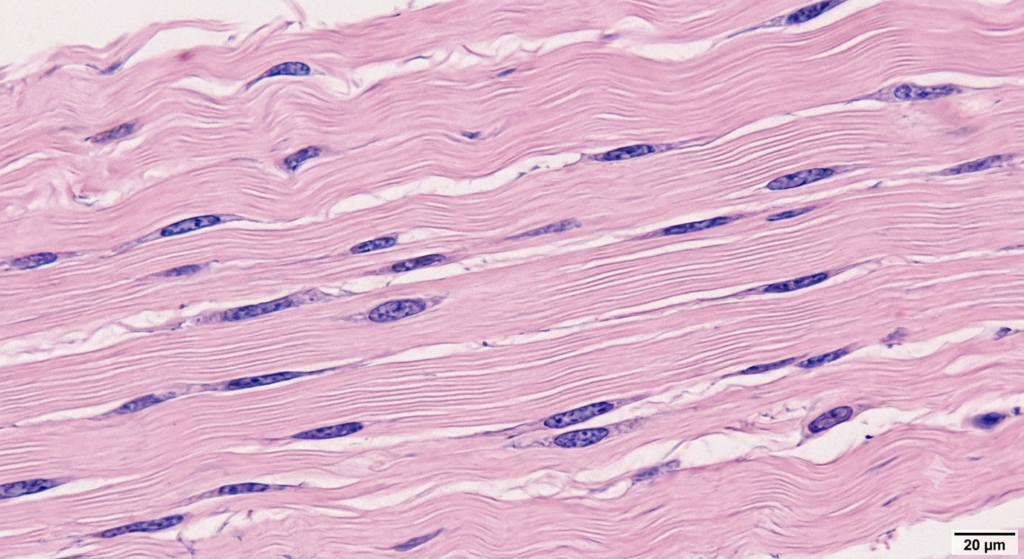
When collagen‑rich tissues are damaged — whether from injury, repetitive strain, inflammation such as arthritis, or simply the passage of time — they do heal, but the process is often slow and rarely restores the tissue to its original elasticity and strength. This is especially true as we age, when the body’s repair systems become less efficient.
Injuries and aging are unavoidable parts of life, but we can influence how well our bodies maintain flexibility. Paying attention to how we move, stretch, and care for our joints helps preserve the range of motion that protects us from repeated injuries and reduces the energy our bodies need for everyday movement.
Take upright standing, for example — known as Mountain Pose in yoga. It seems simple, but it’s actually a fundamental human posture. Standing comfortably with good alignment relies on flexible muscles, responsive tendons, and supportive ligaments working together. When these tissues lose flexibility, even basic postures like this can feel strained or unstable.
Limitations in joint or spinal range of motion can make it difficult to stand comfortably without extra muscular effort, and that added effort can interfere with normal function. In relaxed, efficient standing, the body’s center of gravity falls in line with the spine, hips, and knees, keeping them naturally extended without requiring the major postural muscles to contract. Under ideal conditions, the only muscles that need to work to maintain balance are the calf muscles, which make small, continuous adjustments at a low energy cost to keep us upright.
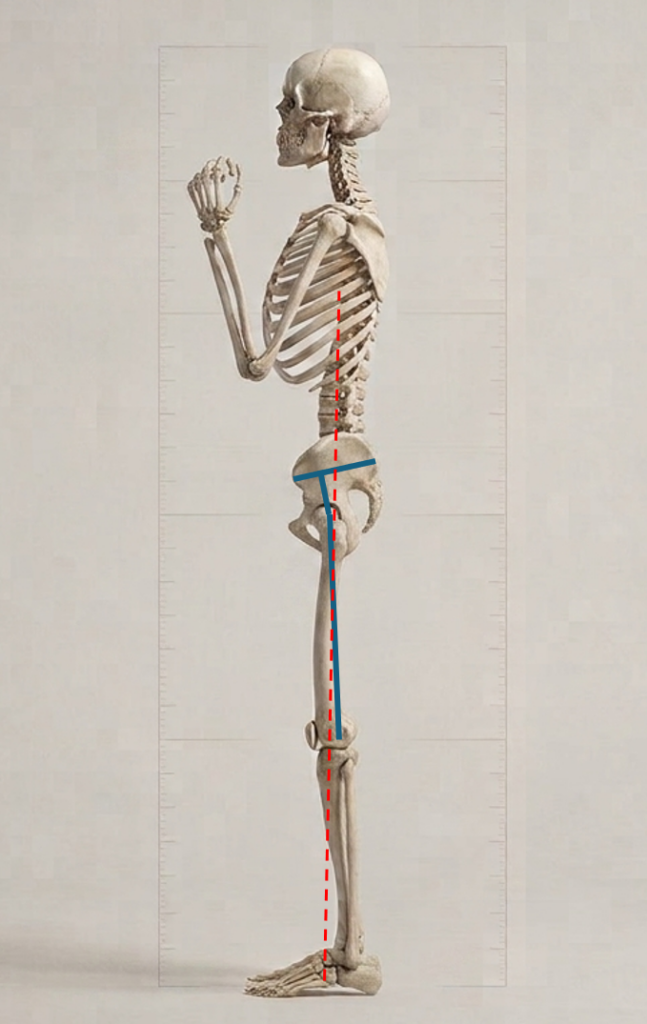
When the joints and spine can no longer rest in their natural alignment, the body must recruit extra muscular effort just to maintain standing — and that added effort carries over into everyday movement, including walking. As more muscles work simply to hold us upright, the energy cost of movement rises, leading to early fatigue and a greater risk of injury.
This challenge is common. Many adults struggle to stand in a neutral, comfortable posture, and mobility limitations in older adults often stem from years of gradually losing joint range and spinal alignment. The goal, then, is not perfection but preservation: preventing further loss of joint mobility and posture, or at least slowing that loss through regular movement, mindful alignment, and simple daily practice.
One of my aims for this site is to share approachable exercises and yoga postures that help sustain healthy movement and posture — resources you’ll find in the yoga section. Yoga carries a deep and rich philosophy, but its physical postures, known as asana, offer practical tools for maintaining flexibility, strength, and overall wellness. With consistent practice, these small habits can support the body’s natural mechanics and help keep us moving with ease throughout life.